

Nashville movers need more than two street addresses to plan a clear handoff between homes. This JM Moving guide helps Nashville customers coordinate access, inventory, packing responsibilities, and destination room placement. Use it alongside your written estimate and the instructions confirmed for your actual properties. Each step gives the responsible contact a specific decision to make before moving day.
Start with two addresses and two responsible contacts
A move is easier to coordinate when each address has a named person who can answer practical questions. The person at the origin confirms what leaves, what stays, and whether a cabinet or room has already been emptied. The person at the destination confirms access, room names, and the location of items that must be available first. These roles can belong to the same customer, but they should still be written separately. Nashville movers cannot infer the right answer from a carton label when the floor plan changes between homes. Record one main contact and one backup for each address, then share the plan before moving day. Avoid putting personal security codes into public posts or labels.

1. Make the inventory version visible
Give the inventory a date and a simple version number. A list prepared before the final garage cleanout may omit heavy tools, extra shelving, or outdoor furniture. Add those items before asking the crew to rely on the list. Record additions and removals together so a deleted sofa is not mistaken for a second sofa. The customer should retain a copy of the version sent to JM Moving. Photographs support the written description, especially for bulky pieces, but they do not replace dimensions or clear access information. This is a practical coordination method, not a promise that every job requires the same document format.
2. Confirm when each property becomes accessible
Write the earliest confirmed access time for the destination and the latest permitted departure time at the origin. A closing appointment, a landlord handoff, and a building reservation are separate events. Do not assume one automatically completes the others. If the destination keys are not available, tell the moving contact before loading plans are finalized. Record the person who will confirm the actual handoff. A proposed time should be labeled proposed until the property owner, manager, or other responsible party confirms it. This helps the crew distinguish a real restriction from a preference.
3. Describe parking without making permit assumptions
For a Germantown townhouse or an East Nashville home, describe the available loading location and the path from the truck to the entrance. Include photographs showing gates, steps, narrow turns, and anything that blocks the route. At a downtown condominium, ask building management about loading access and reservation requirements. The building sets its own rules; this article does not establish a universal Nashville parking permit or elevator policy. Avoid promising a curb space you do not control. If the preferred location becomes unavailable, identify who can approve another practical loading location.
4. Measure the difficult pieces and the narrow passages
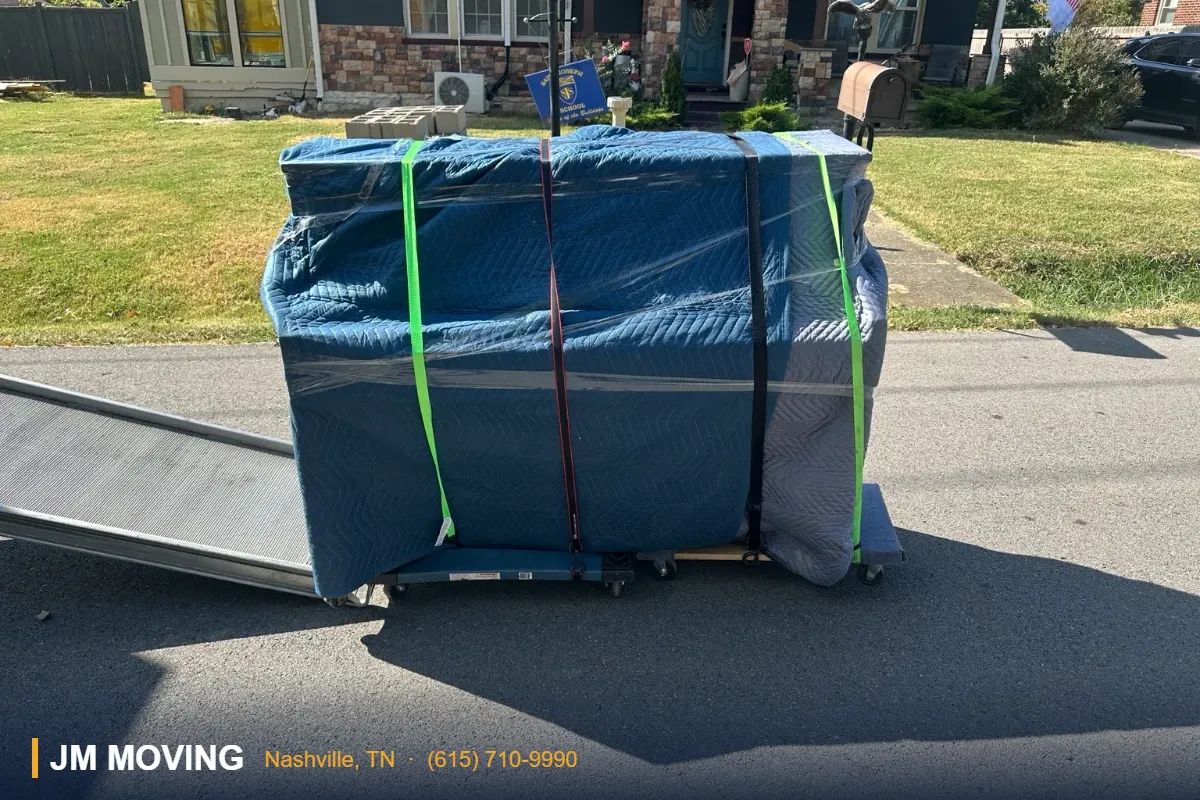
Measure the furniture as well as the doorway. A wide piece may fit through the exterior entrance but encounter a narrow hallway or stair landing farther inside. Note projections such as feet, handles, and fixed trim. Photographs of the entire route are more useful than an isolated close-up of the furniture. Ask the moving team to review pieces that may need professional disassembly or specialty handling. Do not remove structural parts, piano components, or attached fixtures simply to make a measurement work. A measurement is a planning input; the actual handling method must be assessed for the item.
5. Translate room names between the two homes
The origin may have an office that becomes a guest room at the new home. Label cartons for their destination rather than automatically copying the old room name. Use a short destination code such as B1, B2, or OFFICE and place the same code on a room sign where permitted. Include a written key to the codes. Keep labels readable on more than one side of the carton. Confirm whether a ground-floor room or upstairs room is intended before heavy furniture is carried inside. Clear room assignments reduce avoidable handling without guaranteeing a specific unloading time.
6. Separate the first-night essentials
Keep medications, important documents, keys, chargers, and personal valuables under your own control. Prepare a small essentials group for bedding, towels, basic toiletries, and items needed immediately by children or pets. Discuss any items you want unloaded early before the truck is packed. Loading order affects what can be reached first, so a last-minute request may not be practical. Avoid placing urgent documents inside a random kitchen carton. Record who carries the essentials and where they will be placed at the destination. The moving plan should support your arrival routine rather than obscure it.
7. Identify packing responsibilities item by item

A description such as full service is not a substitute for a specific scope. Confirm who packs ordinary cartons, protects furniture, handles agreed disassembly, and prepares specialty items. State which rooms will be customer-packed and which require help. Tell the crew if fragile items, a piano, or a heavy safe are included. The need for special equipment or preparation depends on the actual item and access. For the current estimate, use the written scope and the moving team’s confirmation. Do not treat a checklist in this article as an automatic inclusion in every quoted service.
8. Keep condition information factual
Photograph existing scratches, loose hardware, damaged trim, and areas that need extra attention before the move. Record observations rather than conclusions about who caused an old mark. Save the images privately with the inventory version. At delivery, compare the identified items and report concerns promptly through the agreed customer communication channel. Condition photographs do not replace the service agreement or determine a legal outcome on their own. They help everyone describe the same furniture clearly. Do not publish customer belongings or addresses as marketing material without the appropriate permission.
9. Give changes one clear communication route
Choose one person to approve inventory, access, and placement changes. Multiple family members can help, but contradictory instructions should return to that responsible contact. Write down a new destination room, an added stop, or an extra piece before assuming the crew has received the update. Ask for confirmation that the change has been understood and whether it affects the scope. An added garage collection is different from moving one carton to another room. Keeping the updates specific helps JM Moving discuss the actual job rather than guess what changed.
10. Finish with an origin and destination walkthrough
Before leaving the origin, check closets, drawers, cabinets, bathrooms, balconies, and other agreed areas. Confirm that items intended to remain have remained. At the destination, check the room codes, the identified furniture, and the essentials group with the responsible contact. Save any unresolved notes with the final inventory version. A walkthrough gives you a structured chance to raise questions; it is not a guarantee that every possible issue will be detected. Ask for the correct contact method for later concerns. Retain the written estimate and service documents with your move records.
Two-home handoff worksheet
| Decision | Origin | Destination | Confirmed by |
|---|---|---|---|
| Key access | Departure deadline | Entry availability | Property contact |
| Truck access | Loading location | Unloading location | Customer and building contact |
| Inventory | Items leaving and staying | Room codes and essentials | Responsible customer |
| Changes | Added or removed pieces | Revised placement or stops | Moving contact |
Before the crew arrives
- Confirm the inventory version.
- Name a contact at both homes.
- Confirm keys and loading access.
- Label cartons for destination rooms.
- Keep essential documents and medications with you.
Related Nashville moving guides
Start with the room inventory checklist, review elevator and parking details, and use the packing scope checklist to make the estimate discussion specific.
Example: a closing delay without conflicting instructions
Consider a hypothetical Nashville household moving from a house to a condominium. The origin is ready, but the destination contact reports that keys have not yet been released. The household’s coordinator tells JM Moving what is confirmed and what remains uncertain before approving a change to the loading or delivery plan. The receiving person checks the actual building access window rather than assuming a closing appointment has completed the handoff.
The parties then discuss the available options for that specific shipment. A changed delivery time, an extra stop or a separate storage arrangement may affect the scope and charges, so those details need agreement before work changes. The household keeps one current inventory and records the revised access instructions alongside it. This example illustrates coordination; it is not a completed customer job or a promise that a particular alternative will be available.
Keep receipt and room placement as separate checks
At the destination, an item can be physically received before its final room is available. Record both stages instead of treating arrival as proof of final placement. A carton marked for an upstairs study might temporarily enter an approved holding zone, but its original destination label should remain visible. Record the holding location so the household can find it without asking the crew to remember every carton.
If a later placement visit is needed, request and confirm that work separately. Do not assume the original moving agreement automatically includes a second trip. Give the company the current list of items still needing handling, because the household may already have placed some ordinary cartons itself. A clear remaining-work list is more useful than resending the entire original inventory.
For household preparation beyond the moving inventory, Ready.gov’s supplies checklist can help you think about essentials to keep accessible. Select items relevant to your household, and keep your own personal kit distinct from the shipment being handed over.
Frequently asked questions
Can one person coordinate both homes?
Yes, provided that person can confirm access and answer placement questions at both addresses. A backup contact is useful when travel or a closing appointment makes the main contact unavailable.
What if the keys are delayed?
Notify JM Moving as soon as the delay is known. Explain which address is affected and obtain confirmation of the revised plan before assuming the original timing remains workable.
Should I send photos or a written list?
Use both when possible. The written list identifies what is moving; photographs show furniture size, condition details, stairs, turns, and the loading route that descriptions can miss.
Does a condo always need an elevator reservation?
The building determines its requirements. Ask management directly and share the confirmed reservation or access instructions. Do not infer another building’s rules from this guide.
How should I label rooms?
Use the destination room names or a short code with a written key. Keep the same naming system on carton labels and any room signs so the crew receives consistent directions.
Can I add items on moving day?
Report additions to the responsible moving contact. Ask whether they affect equipment, access, or the agreed scope. Do not assume the original estimate includes items that were not disclosed.
Do all furniture pieces need disassembly?
No. The item, its construction, and the access route determine what is appropriate. Have the team assess difficult pieces rather than taking apart unfamiliar or specialty components yourself.
Should personal documents go on the truck?
Keep essential documents, keys, medications, and personal valuables under your control. Make a separate arrival kit so important items remain accessible throughout the handoff.
Can I use this plan for a Nashville apartment move?
Yes. Adapt it to the two actual addresses and the building’s confirmed rules. Include stairs, loading access, room assignments, and the person responsible for each handoff.
How do I discuss my move with JM Moving?
Call (615) 710-9990 with your addresses, proposed date, inventory, and access details. The final price and service scope are confirmed through the actual estimate discussion.
Confirm your Nashville moving handoff
Call JM Moving at (615) 710-9990 to discuss the inventory and access plan for your Nashville local move. Your Move. Our Mission.
Flat Rate King JM Moving Nashville
