
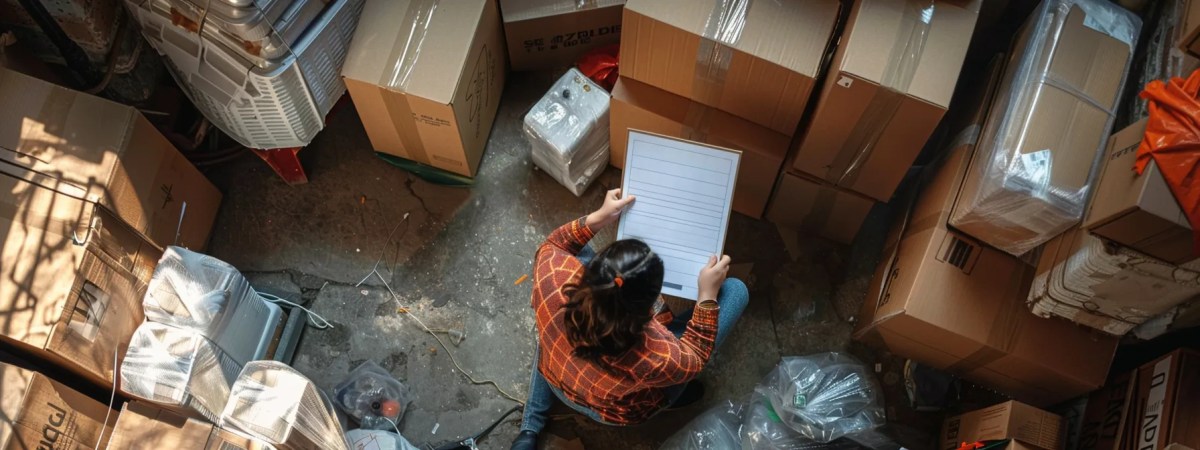
A craft room inventory helps keep sewing machines, fabric, thread, tools, and small parts organized through a Nashville move. Start with equipment models and accessory lists, then group supplies by project or use. Keep sharp tools and products requiring a safety decision separate from ordinary fabric cartons.
This sewing room moving checklist covers the information to gather before packing and the questions to review with JM Moving. It does not replace manufacturer instructions for machines or specialist advice for fragile textiles. Confirm which preparation, disassembly, and packing tasks are included in the written scope.
The Anatomy of a Craft Room Inventory: Why Specialized Tracking Matters
Standard household inventories group items by broad room categories like “bedroom” or “office,” which utterly fails the nuances of a dedicated craft space. A sewing and craft room contains an extraordinarily high density of small-format, high-value, and easily misplaced items. From specialty rotary cutters and serger blades to vintage buttons, heirloom lace, and computerized embroidery units, every piece requires individual tracking to maintain accountability during transport.

Divide the room into functional zones such as machines, cutting tools, notions, textiles, and unfinished projects. A clear group name and container code helps the mover understand the requested packing work. Use the room inventory checklist to connect these zones with the rest of the household.
Cataloging Sewing Machines and Maker Models
The centerpiece of any sewing studio is, without question, the sewing machine, embroidery unit, or specialized serger. These machines represent significant financial and sentimental value, often featuring sensitive internal computer boards, delicate tension disks, and calibrated needle bars that need appropriate support during transport.
Before any equipment is boxed or blanket-wrapped, your inventory must capture specific technical details for each machine:
- Exact manufacturer name, model number, and serial number.
- Associated power cords, foot pedals, and specialized knee-lift levers.
- Attached specialty feet (walking feet, buttonhole feet, free-motion quilting feet).
- Current mechanical condition notes or recent service history dates.
- Manufacturer-specified transit locks or securing mechanisms.
Documenting these details with high-resolution photographs prior to packing provides a useful condition record. When preparing your larger equipment, consult the manual for your model’s transport preparation; do not assume it has an internal moving lock. If you are coordinating a larger scale packing project, you can use the packing scope checklist to determine exact material requirements for high-value machinery.
Managing Accessory Boxes, Thread, and Small Parts
If machines are the heart of your studio, accessories and notions are the lifeblood. Thread spools, bobbins, needles, zippers, snaps, beads, and stamps present a unique logistical challenge due to their sheer volume and tendency to shift, spill, or intermingle during motion.
Effective inventory management for small craft parts begins with container control. Check each organizer’s latch and divider fit. Keep small parts in suitable closed inner containers, and secure outer wrapping to itself rather than placing adhesive on a delicate finish. Each organizer must receive a unique catalog number on your master sheet. For delicate or brittle items such as glass seed beads, ceramic shaping tools, or acrylic quilting rulers, extra cushioning is mandatory. To understand the best protective techniques for these vulnerable items, review our guide on packing fragile items for moving.
Thread collections require special attention. Record the rack, spools and current packing status separately, and ask the owner or moving team how those physical items should be prepared. Spools should be bagged by color family in heavy-duty resealable bags, tagged, and packed snugly into sturdy corrugated boxes.

Fabric Stash Inventory and Textile Protection
For avid sewists and quilters, the fabric stash is an accumulated treasure trove collected over years of project planning. Fabric is heavy, susceptible to moisture, and attractive to pests if not handled correctly. When creating your craft room inventory, treat your textiles with the same respect you afford your hardware.
Group your fabric inventory by fiber content, yardage, and project assignment whenever possible. While you do not need to list every quarter-yard scrap individually, bolt collections, uncut yardage blocks, and finished quilt tops deserve line-item entries. Use clean, suitable cartons or bins for dry textiles. Plastic can trap moisture and does not control humidity. Fragile, antique, or decorated textiles may need preservation materials and specialist advice rather than compression. For visual documentation before boxing up your textile shelves, our photo walkthrough checklist offers an excellent framework for capturing room layouts and storage bins.
Craft Parts, Storage Compartments, and Manufacturing Prep
Modern craft rooms often feature modular furniture systems, rolling cart storage units, and specialized workstation components. Preparing these items for transport requires systematic disassembly and hardware containment. Confirm whether disassembly is required and who will perform it. Label any safely removed hardware and keep it in a matching parts container; avoid taping it directly to a finished furniture panel.
Manufacturing prep also involves securing internal drawers in mobile craft cabinets. Use non-marring straps or stretch wrap around entire cabinet bodies to prevent drawers from sliding open during transit, which can warp drawer slides and damage internal craft parts. Never leave loose jars of glue, liquid mediums, or solvent-based varnishes inside furniture drawers; these must be packed separately in accordance with standard safety guidelines.
Owner-Specified Exclusions and Studio Restrictions
Every professional move has clear boundaries regarding what professional movers can and cannot transport. As part of your inventory preparation, you must explicitly identify owner-specified exclusions. Certain items common to craft spaces fall under carrier restrictions or require personal transport by the homeowner:
Set aside aerosol fixatives, solvents, resin components, dyes, adhesives, and other chemicals for an item-specific decision. Show the mover the product labels and ask about exclusions. Do not assume an excluded chemical is safe to transport in your own vehicle. Follow applicable product, transport, and local disposal guidance. Keep irreplaceable patterns or journals under the owner’s chosen custody arrangement.
10 Detailed Tips for Craft Room Relocation Success
- Photograph All Settings: Take clear photos of tension dials, stitch settings, and accessory placement on your sewing machine before disassembly.
- Secure Thread Racks: Remove all spools from vertical storage pegs to prevent tangled messes and broken wooden spindles during transit.
- Audit Small Hardware: Record safely removed screws and brackets in labeled parts containers matched to the furniture code.
- Protect Rotary Blades: Follow the cutter manufacturer’s safe storage instructions, engaging the blade guard or using a secure purpose-made case. Do not remove blades without the proper procedure.
- Protect Dry Textiles: Use suitable clean containers for dry fabric, and avoid tight compression or improvised treatment of delicate textiles.
- Number Your Bins: Assign a unique tracking number to every clear plastic organizer and correlate it with your master inventory spreadsheet.
- Keep Cords Together: Use velcro ties to bundle power cords and foot pedals, then place them in a dedicated bag marked with the machine’s serial number.
- Isolate Liquids: Identify all glues, paints, and liquid mediums for carrier review. Arrange an appropriate alternative for excluded items rather than assuming personal transport is safe.
- Box Quilting Rulers: Slip acrylic rulers between layers of thick bubble wrap or flat cardboard to prevent cracking under shifting box weight.
- Create an Open-First Box: Pack a dedicated container with your primary scissors, measuring tape, marking chalk, and a basic machine for immediate access at your new Nashville home.
Concrete Sample Item Record
To assist you in establishing your own master inventory document, review the following professional sample record format:
Frequently Asked Questions (FAQs)
Should I pack my sewing machine in its original retail box?
A sound original carton with its correct fitted inserts may be useful. Check the model’s transport instructions and the condition of the packaging. If it is missing or damaged, ask about a suitable packing design before moving the machine; do not assume a carrying cover provides shipping protection.
How should I prepare my sewing machine for professional movers?
Follow the exact machine’s manual for preparation and safely detachable accessories. Record the model and pair its cord, pedal, and attachments. Do not open internal mechanisms or tape controls into position without manufacturer guidance. Ask an authorized service provider if the instructions are unclear.
Can professional movers transport my liquid fabric dyes and glues?
List the exact products for the mover and confirm its exclusions. Keep hazardous or unknown products out of ordinary cartons. Personal transport also needs an appropriate safety decision; follow the manufacturer and local waste guidance rather than placing everything in a car because it is excluded from the truck.
What is the best way to move thousands of yards of fabric without damage?
Choose clean containers suitable for the fabric, weight, and storage conditions. Pack only dry materials. Plastic can trap moisture, while cardboard can be weakened by dampness. Neither replaces an appropriate environment or specialist care for fragile textiles.
How do I keep my embroidery thread from turning into a tangled knot?
Remove spools from vertical storage racks before moving. Thread will easily vibrate off pegs while a truck is in motion. Group spools into color-sorted plastic bags or specialized thread-storage boxes with individual compartments.
What are standard moving rates for local relocations in Nashville?
Ask JM Moving for a written estimate based on the actual inventory, packing work, route, and access conditions. Confirm the included services and any exclusions before agreeing to a move.
How do I schedule a move or get a custom quote with JM Moving?
Call JM Moving at (615) 710-9990 or use its official website to share the inventory, date, and access details. Confirm scope and availability directly before considering the move booked.
Are acrylic quilting rulers safe to pack flat in standard boxes?
Yes, provided they are cushioned correctly. Lay them flat between sheets of corrugated cardboard or bubble wrap to prevent them from bending, cracking, or scratching under shifting weight.
Should I disassemble my large cutting table before moving day?
Check the manufacturer’s instructions and confirm the agreed disassembly responsibility. Some tables travel assembled and others require preparation. Do not remove structural parts without a plan. Identify any removed hardware in a separate labeled container.
What items should go into my ‘Open-First’ craft box?
Pack your primary fabric scissors, rotary cutter in its safe guarded case, a reliable measuring tape, fabric marking chalk, and your most frequently used machine feet so you can resume creating immediately upon arrival.
Sewing machine inventory: connect each model with its accessories
A sewing machine inventory should list the manufacturer, model, relevant serial number, case, power cord, foot control, extension table, and attachments. Keep detailed serial records private while using a short machine code on outer labels. Check that a pedal or power supply actually belongs to the machine before packing it with the set.
For packing craft supplies, preserve unfinished projects as groups. Put the pattern reference, cut pieces, remaining fabric, and required notions in one labeled project container when suitable. Keep sharp needles and pins secured in their proper cases. Do not leave an exposed needle hidden in a fold of fabric or a pin cushion where it can injure someone unpacking.
Your fabric stash moving plan can group ordinary yardage by fiber, project, or planned storage shelf. Do not spend hours measuring every scrap unless the information is useful. Record larger cuts and valuable pieces, and note fabric already affected by moisture, pests, or staining so it receives an appropriate decision before moving.
The Smithsonian’s textile storage guidance is relevant to protecting older fabrics from unsuitable storage conditions. Fragile quilts, silk, embroidered pieces, and mixed-material work may need a conservator’s advice. Avoid treating moving preparation as an opportunity for a rushed wash or repair.
Craft tool packing checklist
- Guard scissors, rotary cutters, and other cutting edges using suitable cases.
- Close small-parts organizers and check whether dividers reach the lid.
- Keep cutting mats supported according to their care instructions.
- Record machine preparation still awaiting a manual or service provider.
- Separate chemical products from ready-to-load household cartons.
For chemical products, consult the FMCSA hazardous-materials guidance when planning an interstate shipment, then confirm the mover’s actual exclusions. For local disposal options, check Metro Nashville’s household hazardous waste information and confirm acceptance of the exact item.
Set up a safe unpacking order
Prepare shelves and work surfaces before opening tool cartons. Put the machine in a stable location, match accessories, and follow its setup instructions before switching it on. Keep small parts, needles, and batteries away from children and pets during unpacking. Check each container code against the inventory and keep packaging while documenting any issue.
Start with a simple owner-carried project kit if you want supplies accessible soon after moving. Keep it limited and safely contained. The larger studio can be unpacked in stages once furniture, lighting, and storage are ready, reducing the need to move fragile equipment repeatedly around a crowded room.

Plan your Nashville move with JM Moving
Share your inventory, requested date, packing needs, and access details with JM Moving. Call (615) 710-9990 to ask about the next step. Request written confirmation of scope, pricing, and availability before making plans around a service.
