
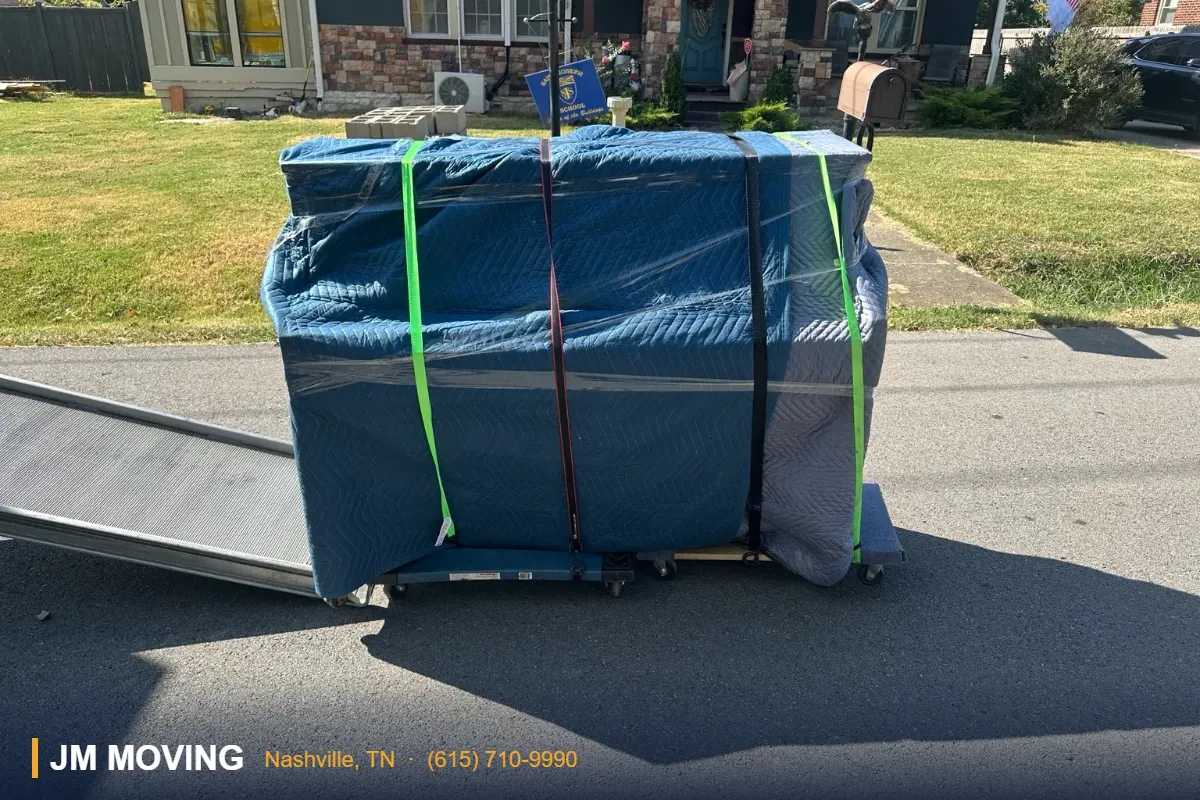
A piano move includes more than the instrument. The bench, music books, pedals, power adapters, metronome, and small keepsakes need their own packing plan. If you are comparing piano movers in Nashville, prepare a bench and accessory checklist alongside the main piano inventory. This guide explains how to record each item, separate fragile or irreplaceable pieces, and give the moving team useful access information. It covers accessory preparation, not instructions for lifting or dismantling an acoustic piano.
Start with a simple music-room inventory: one line for the instrument, one for each bench, and separate entries for cartons and accessories. Tell JM Moving which items you want reviewed for packing and which you will carry yourself. Call (615) 710-9990 or use JM Moving to discuss the scope. Ask for written confirmation of pricing, preparation responsibilities, and availability; an inquiry or an inventory does not confirm a booking.

Understanding Your Piano Bench: Types and Preparation
The piano bench is much more than a simple seat; it is an intricate piece of furniture that often houses decades of musical heritage. Before your local relocation day arrives, you must identify what kind of bench accompanies your instrument. Standard wood benches feature hinged lids that lift open to reveal internal storage compartments filled with sheet music, method books, pencils, metronomes, and miscellaneous performance tools. Adjustable artist benches, by contrast, utilize heavy mechanical knobs and internal screw mechanisms on both sides to raise and lower the seating height. Hydraulic or pneumatic benches require special care to prevent fluid leaks or pressure seal failures during transit.
Emptying the internal storage compartment is the single most important step you can take before moving day. Leaving heavy anthologies, thick hardback books, or loose metallic metronomes inside a bench during transit creates severe structural risks. As the bench is lifted, carried, and loaded into the truck, shifting weights can stress the inner hinges, crack wooden partitions, or puncture the baseboards. Furthermore, heavy objects rolling around can scratch the delicate interior lining. Take time beforehand to box up all books and loose items separately. For more guidance on categorizing your belongings, you can reference our detailed packing scope checklist.
Music Books, Sheets, and Paper Preservation
Sheet music collections represent countless hours of practice, notation, and sentimental value. When preparing your piano bench accessories for a local move in Nashville, paper management requires strategic protection against humidity, dust, and crushing forces. Standard cardboard boxes are often inadequate if they are overloaded, as heavy stacks of paper can easily warp or tear binder spines. Instead, sort your sheet music by size, bundling softcover books and loose folios into manageable, flat packs wrapped in sturdy kraft paper or placed inside protective plastic sleeves.
Rare scores, handwritten compositions, and signed programs deserve a separate decision. Keep them dry, supported, and away from packing tape or rubber bands. The Library of Congress guide to caring for works on paper recommends suitable protective enclosures and careful handling; consult a conservator for fragile or flaking material. Use your room inventory checklist to identify these items without exposing private annotations in public box labels.
Pedals, Extenders, and Mechanical Hardware
Acoustic piano pedals and their supporting assemblies are part of the instrument. Leave their removal or adjustment to the person qualified and assigned to prepare the piano. Digital keyboards may have detachable sustain pedals, power adapters, or a pedal bar, while a child’s pedal extender may simply sit over the acoustic pedals. Record the exact arrangement and consult the model instructions before removing anything. An accessory checklist should never become a reason to undo an unfamiliar mechanism.
When handling detachable pedal units for digital instruments, coil all power cords and connection cables loosely using velcro ties rather than tight wire twists that can fray internal copper strands. Wrap each pedal assembly in thick furniture blankets or bubble wrap, securing the protective layers with stretch film. Attach a label to a removable cable tie or tag identifying the instrument and port; avoid adhesive on delicate cable surfaces. Documenting these physical connections with photographs before unplugging them saves considerable time during reassembly. For a visual reference on capturing your setup accurately, consult our photo walkthrough checklist.
Identifiable Loose Accessories and Metronomes
Small music-room tools are easy to overlook: metronomes, reading lights, tuning devices, pencils, polishing cloths, and spare stand hardware. Photograph the group, then count the pieces before placing them in labeled pouches. For a mechanical metronome, follow its instructions for securing the pendulum and use its fitted case when available. Do not improvise a lock or force the arm into a position it does not naturally accept. Record a missing cover or damaged latch as a preparation question.
Designate a single, sturdy plastic tote or a reinforced cardboard box explicitly for these small loose accessories. Label the container clearly on multiple sides with bright markers, designating it as essential music room hardware. Keep this designated accessory box with your personal vehicle or ensure it is loaded in a very specific, easily accessible spot in the moving truck. This prevents the frustrating search for a lost metronome weight or power adapter when you are eager to sit down and test your instrument in its new destination room.
Owner-Carries: Valuables, Heirlooms, and Personal Items
Some items deserve an owner-carry decision: original compositions, personal documents, small valuables, and family keepsakes. Choose this deliberately instead of putting every object from the piano top into the nearest carton. Personal transport still needs suitable padding, a secure place inside the vehicle, and protection from heat or moisture. Do not leave valuables unattended in a parked car. List owner-carried items on a separate page so they are counted without being mistaken for the mover’s shipment.
Pack your owner-carry items into padded tote bags or dedicated personal luggage that rides directly in the cabin of your own vehicle. Take high-resolution photographs of any heirloom music boxes or decorative items before transit so you have a complete visual record. By keeping these irreplaceable pieces under your direct supervision, you allow the professional crew from JM Moving to focus entirely on the heavy lifting of the piano body and bench while you safeguard the personal treasures that give your music room its soul.

Dimensions, Clearances, and Room Destination Planning
Measure the bench at its widest points, including adjustment knobs, and record its approximate size beside the instrument dimensions. Share narrow doorways, stairs, sharp hallway turns, and the planned destination room. Measurements help the moving team assess a route; they do not establish that a load will safely fit. Do not remove bench legs or operate hydraulic mechanisms solely to force a fit. Identify the model and agree on any disassembly with the appropriate person before moving day.
Map out the exact destination room layout in advance. Decide precisely where the piano will sit against the wall, taking into account heating vents, direct sunlight exposure, exterior doors, and acoustic reflection points. Ensure the intended spot has adequate floor space to accommodate both the instrument and its matching bench without crowding walkways or blocking electrical outlets. Providing our team with clear instructions regarding the target room simplifies placement and protects your floors and walls from scuffs.
10 Piano Accessory Packing Checks
- Empty the Bench Fully: Remove every single book, score, and pencil from the storage compartment to eliminate shifting weight and prevent structural stress on the inner hinges during transit.
- Bundle Sheet Music Securely: Support ordinary scores in appropriately sized folders and cartons. Give rare or fragile paper its own suitable archival enclosure.
- Lock Mechanical Metronomes: Follow the maker’s instructions for the pendulum latch, and protect the metronome in a suitable case.
- Protect Wood Finishes: Wrap wooden piano benches in thick, quilted furniture blankets, securing the padding with stretch film to prevent scratches, gouges, and corner bruising.
- Label All Electronic Cords: Use removable tags to identify each adapter, pedal cable, and connection, and photograph the layout before disconnection.
- Transport Valuables Personally: Keep family photographs, antique music boxes, and irreplaceable handwritten manuscripts in your own vehicle rather than packing them in cargo boxes.
- Measure Doorway Clearances: Check the width of all exit and entry paths for oversized duet benches and artist seats to determine if leg removal is necessary.
- Secure Detachable Pedals: Wrap loose pedal units and youth extenders in bubble wrap and pack them in a dedicated, clearly labeled hardware tote.
- Pre-Plan Room Placement: Measure your destination floor space and identify acoustic sweet spots, ensuring proper clearance for the bench before the moving crew arrives.
- Coordinate With Specialists: Partner with experienced professionals who understand how to handle delicate musical equipment, and reach out to our team at (615)710-9990 or visit https://jmmoving.store for comprehensive support.
Piano Bench and Accessory FAQs
Should I leave my sheet music inside the piano bench during the move?
No, you should always remove all books, sheet music, and accessories from the bench storage compartment. Heavy paper stacks shift during transit, putting excessive strain on the internal hinges, bottom boards, and lid mechanisms.
How should I pack antique or rare music scores for transport?
Use a supportive folder or enclosure appropriate to the paper, then a rigid box that prevents bending. Do not use adhesive tape or rubber bands directly on scores. Valuable, brittle, or flaking originals may need a paper conservator’s advice before packing. Keep ordinary practice books separate so they cannot compress delicate sheets.
Can I leave my mechanical metronome unlatched on top of the piano?
Remove it from the piano and follow the maker’s transport instructions. Use the designed pendulum latch if present and place the metronome in its fitted case or suitable cushioning. If a latch is damaged, ask the manufacturer or a qualified repairer rather than securing moving parts by force.
What is the best way to protect a polished wooden piano bench?
Use clean furniture padding suitable for the finish and secure the padding without applying adhesive to wood or upholstery. Avoid pressure on adjustment knobs, lids, and hinges. Ask for a packing review if the bench has loose joints or an unusual finish.
How are detachable digital piano pedals and power cords handled?
Coil all electrical cords loosely with velcro ties, wrap pedal units individually in bubble wrap, and place everything into a dedicated, clearly labeled hardware container.
Are there items I should always carry myself instead of letting movers handle?
Yes, personal valuables such as framed family photographs, antique keepsakes, original handwritten scores, and heirloom music boxes should be transported directly in your personal vehicle.
How do I know if my piano bench will fit through narrow doorways?
Measure the widest points, including knobs, and share those dimensions with the moving team along with doorway and turn measurements. The team should assess the route. If disassembly appears necessary, confirm that the model permits it and decide who is responsible before any screws are removed.
What pricing structure applies when booking piano moving services in Nashville?
Request a written estimate that lists the piano, bench, accessory cartons, stairs, access route, and any packing or specialist preparation requested. A general household rate does not establish the price or suitability of a piano move. Ask which services and materials are included and who will prepare and reassemble each component.
How far in advance should I schedule my piano and accessory move?
Contact JM Moving once you know the dates and addresses, especially when access depends on building reservations or a limited delivery window. Share any date flexibility. Your preferred time remains a request until the team confirms the scope and schedule in writing.
How can I contact JM Moving to coordinate my relocation details?
You can reach our Nashville team directly by phone at (615)710-9990 or explore our full suite of local planning resources by visiting https://jmmoving.store.
Example Bench and Accessory Record
To maintain absolute precision during your local move, establishing a detailed itemized record for your music room accessories is essential. Below is a concrete sample record demonstrating how to document each component of your piano bench and accessory setup:
Summary and Next Steps
Preparing your piano bench, music books, pedals, and loose accessories for a local move in Nashville requires a systematic approach that mirrors the care given to the instrument itself. By emptying storage compartments, bundling paper scores securely, protecting delicate mechanical metronomes, and keeping personal heirlooms under your direct supervision, you create a clearer handoff at both homes.
Before requesting an estimate, count the accessory cartons, identify the bench type, and note any preparation questions that remain unresolved. Share the list with JM Moving and ask who will handle each task. Keep the final agreed version available on moving day so both homes use the same room names, carton codes, and owner-carry instructions.

Ready to Move Your Piano and Accessories in Nashville?
Contact JM Moving today at (615)710-9990 or visit our website to coordinate your local relocation.
Related JM Moving guides: Nashville Moving: Grandfather Clock Accessory Record · Pool Table Movers Nashville: Accessory Sorting Plan
