
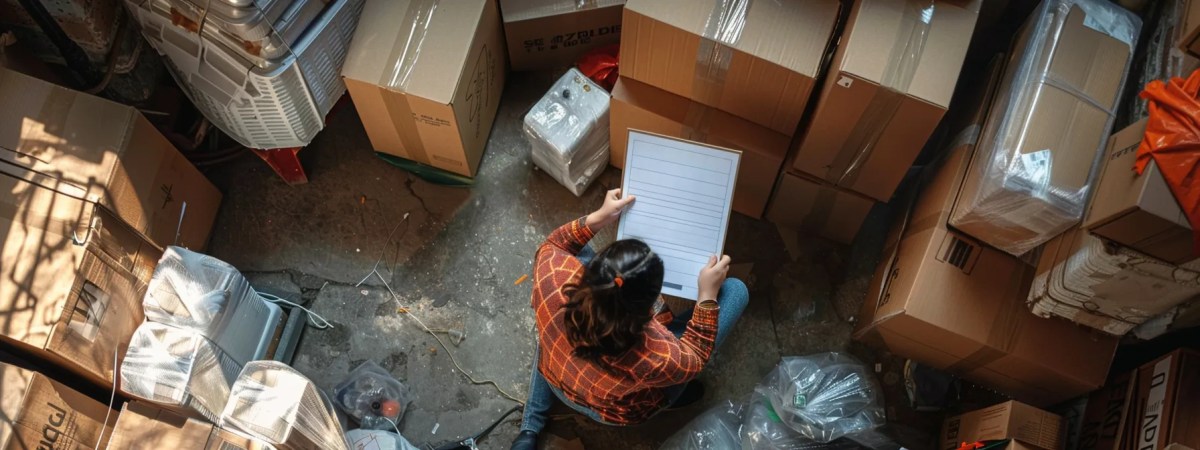
A bakeware inventory separates metal pans, heavy cookware, fragile glass dishes, measuring tools, and small baking accessories before a Nashville move. Count what you own, note existing chips or damage, and identify which pieces need special packing. Start with the actual collection rather than a fixed box count or generic kitchen estimate.
This baking supplies packing checklist helps you discuss the scope with JM Moving and decide what you will prepare yourself. Keep heavy pieces separate from fragile ones, use containers suited to the weight, and follow product instructions for appliances. Record unresolved questions before the packing appointment.
Assessing Your Bakeware Collection: Nashville Moving Inventory
Before putting a single piece of paper inside a carton, you need a clear overview of what you own. Bakeware collections often accumulate over years of holiday baking, wedding gifts, and impulse purchases at local kitchen boutiques. Creating a detailed Nashville moving inventory helps determine how many small, medium, and heavy-duty boxes you will actually require. It also prevents you from paying to pack and move items you no longer use.

Begin by grouping your bakeware by material and weight class. Metal baking sheets, aluminum cake pans, and stainless steel cooling racks form one sturdy category. Glass baking dishes, ceramic casseroles, and stoneware pie plates form a separate, highly fragile group. Silicone molds and flexible mats represent a lightweight, resilient category that requires minimal special padding but still demands organized nesting. Documenting these counts accurately is essential when requesting a tailored moving plan. For detailed assistance, you can review our room inventory checklist to check that every kitchen zone is accounted for before moving day.
To give you a realistic picture of what a standard residential kitchen inventory looks like for baking supplies, consider the following sample inventory and access record:

Packing Responsibilities and Planning Your Scope
When organizing a local move in Tennessee, establishing clear expectations regarding packing responsibilities is crucial. Homeowners often wonder whether to tackle the kitchen themselves or bring in professional packing services in Nashville residents rely on for efficiency and damage prevention. Ask JM Moving whether full or partial kitchen packing is available for your requested scope and date, then confirm the agreement in writing.
When defining your moving scope, consider the time investment required. The time needed depends on the number, condition, and complexity of the items, along with the agreed preparation work. If you choose a hybrid approach—where you pack non-fragile pots and pans while professionals handle delicate glassware and specialty baking equipment—outlining this division beforehand prevents moving day confusion. To help structure your packing agreement, consult our packing scope checklist. A clear scope lets the mover review the materials and preparation needed for your kitchen.
Mastering Baking Pans and Metal Bakeware
Metal bakeware—including cookie sheets, jelly roll pans, loaf pans, and muffin tins—is durable enough to withstand the rigors of a local transit route, but improper packing can result in warped frames, scratched non-stick coatings, and dented edges. Because metal is rigid, bakers often make the mistake of stacking too many pieces together without protective layers.
To pack metal bakeware correctly, start by cleaning and drying every piece thoroughly to prevent trapped moisture and rust during humid Nashville summers. Instead of stacking flat sheets horizontally at the bottom of a large carton (which makes the box unwieldy and strains the structural integrity), pack baking sheets and large flat pans vertically on their sides like books in a shelf. This technique distributes pressure evenly across the frame. For nested items like muffin tins or loaf pans, place a sheet of unprinted packing paper between each unit to protect non-stick surfaces from friction abrasions.
Handling Mixing Bowls: Glass, Ceramic, and Stainless Steel
Mixing bowls are fundamental to any baking operation, yet their varied materials require distinct handling strategies. Stainless steel bowls are generally sturdier than glass but should still be cushioned and nested only when they fit without force. Glass bowls, Pyrex measuring vessels, and heavy ceramic mixing crocks, however, demand individual wrapping and strategic placement.
When packing a set of ceramic or glass mixing bowls, never nest them without thick cushioning between the walls. The friction of transit can cause micro-fractures where the rims touch. Wrap each bowl individually in three to four sheets of clean packing paper, tucking the excess neatly inside the cavity. Place the largest, heaviest bowl at the bottom of a medium dish-pack box, and layer lighter bowls on top only if they are securely separated by corrugated cardboard inserts. For delicate glass bowls, review our specialized guide on packing fragile items for moving for additional fragile-item preparation guidance.
Measuring Utensils, Small Tools, and Gadgets
Baking is a science of exact measurements, meaning your kitchen drawers are likely filled with nested measuring cups, spoons, digital scales, offset spatulas, pastry brushes, and decorating tips. These small items are notoriously easy to lose or damage if tossed loosely into a miscellaneous carton.
Group all measuring cups and spoons by material. Stainless steel and heavy plastic measuring sets can be secured together on a metal ring or rubber band, then wrapped as a single unit in packing paper. Place sharp items like pastry wheel cutters, bench scrapers, and offset spatulas into a dedicated small box or wrap their blades securely in heavy cardboard sleeves before boxing. Never leave sharp edges exposed against cardboard walls where they can puncture the exterior during handling by local movers in Nashville homeowners trust.
Specialty Baking Equipment and Delicate Decorating Tools
Serious bakers often own specialty gear that falls outside standard pots and pans. Items like standing mixers, food processors, copper sugar-work kettles, delicate porcelain ramekins, and tiered cake stands require specialized packing protocols. For instance, a heavy countertop mixer has a high center of gravity and delicate internal gears; it should never be packed on its side or in an oversized box with loose accessories.
Whenever possible, pack specialty appliances in their original manufacturer boxes with molded styrofoam inserts. If original packaging is unavailable, wrap the appliance in heavy-duty bubble wrap, secure it in a sturdy box, and fill all surrounding voids with crumpled paper or custom cardboard braces. For delicate items like tiered wedding cake stands or sugar-craft molds, use individual compartment boxes with corrugated dividers. Documenting these high-value specialty items visually before packing is also wise; refer to our photo walkthrough checklist to capture pre-move conditions accurately.
Ten Detailed, Practical Tips for Packing Baking Supplies
Use these ten preparation checks to organize your baking inventory before packing:
- Audit and Purge First: Separate damaged cookware and expired ingredients for appropriate disposal; donate only sound items accepted by the recipient before packing begins to reduce unnecessary moving weight and volume.
- Use Double-Walled Dish Packs: Always select heavy-duty, double-walled corrugated boxes for glass and ceramic bakeware to absorb road vibrations and stack weight.
- Pack Flat Items Vertically: Position baking sheets, cooling racks, and cutting boards on their sides like files rather than flat stacks to distribute pressure evenly.
- Never Overload Heavy Cast Iron: Limit cast iron Dutch ovens and heavy skillets to small boxes, ensuring total box weight stays well below standard lifting thresholds.
- Cushion Every Glass Rim: Wrap glass pie plates and casserole dishes individually, paying special attention to reinforced handles and rims where chips occur most often.
- Nest with Interleaving Paper: Place clean unprinted paper between nested metal pans and mixing bowls to prevent metal-on-metal scratching and finish degradation.
- Secure Small Gadgets in Bundles: Group measuring spoons, piping tips, and small pastry tools into labeled zip-top bags before boxing to prevent them from slipping into box seams.
- Fill All Box Voids Completely: Eliminate shifting space inside boxes by packing crumpled paper tightly around the sides and top before sealing the flaps securely with reinforced tape.
- Label Boxes with Specific Content: Clearly write “KITCHEN – BAKEWARE (FRAGILE)” and note the specific room destination on multiple sides of every carton for efficient unloading.
- Keep Essential Baking Tools Accessible: Pack a separate “First-Night Box” containing a few basic mixing bowls, measuring cups, and your favorite spatula so you can bake immediately in your new home.
Fragile Grouping and Box Weight Distribution Principles
A common pitfall in kitchen packing is improper weight distribution. Bakeware ranges from paper-thin silicone mats to twenty-pound cast-iron roasting pans. Mixing heavy cast iron with fragile glassware in the same box creates an immediate hazard. The heavy item will shift during transit, crushing delicate items regardless of how much bubble wrap was used.
Strictly separate items by fragility and weight tier. Fragile items like glass, ceramic, and porcelain must occupy boxes cushioned with generous layers of crumpled paper on the bottom, sides, and top. Heavy items must be housed in small, reinforced boxes that can be stacked safely at the base of a moving stack. Check the carton rating and the actual handling conditions. Split overly heavy contents; no fixed weight makes every carton sound or every lift safe.
Frequently Asked Questions About Nashville Baking Equipment Packing
Should I remove glass trays from my microwave or oven before moving?
Follow each appliance’s transport instructions for safely detachable trays and racks. Do not remove fixed parts or alter an appliance without the appropriate guidance. Wrap them individually in heavy bubble wrap and pack them in a dedicated flat dish pack.
How should I pack silicone baking mats and molds?
Silicone baking mats should be laid flat between sheets of clean paper or rolled loosely rather than folded sharply, which can create permanent creases in the material.
Can I leave pantry baking supplies like flour and sugar in their containers?
Unsealed paper bags of flour, sugar, and cornstarch are prone to tearing and spilling under transit pressure. Ask whether the actual dry goods are accepted. If they are, retain product identification and use suitable clean containers or secondary containment to reduce spills.
What is the safest way to transport delicate glass pie pans?
Wrap each pie pan individually with multiple layers of packing paper, edge-pack them vertically in a small box lined with crumpled paper, and mark the exterior clearly as fragile.
How do professional movers handle high-end electric stand mixers?
Stand mixers are heavy and mechanically complex. They should be unplugged, attachments removed and wrapped separately, and the main unit secured in a fitted box with dense cushioning.
Is it better to pack baking sheets flat or on their sides?
Packing baking sheets and large flat pans vertically on their sides is significantly safer because it prevents weight from bowing the center of the stack.
How should I handle bulk baking ingredients during a local move?
Review bulk food, cooking oils, and any other liquids with the mover before packing. If accepted, choose suitable containers, retain labels, and keep them separate from items a leak could damage. Do not treat a locking lid as a guarantee against leakage.
What box size is ideal for heavy stoneware mixing bowls?
Small or medium heavy-duty dish packs are ideal. Avoid large boxes, which become too heavy when filled with dense ceramic and stoneware.
How can I protect delicate metal cookie cutters from bending?
Nest small metal cookie cutters inside a sturdy small box or rigid plastic container rather than letting them float loose in a large box where they might be crushed.
Who should I contact to discuss custom kitchen packing services in Nashville?
You can reach out to JM Moving directly at (615) 710-9990 or visit https://jmmoving.store to discuss customized packing and moving solutions for your home.
Moving bakeware: build a useful container record
For moving bakeware, record both the item count and the container count. A nested set of four metal bowls can appear to be one object during a quick walkthrough. Write the number of pieces and note whether there are matching lids or removable bases. A springform pan should be identified as a matched ring and base, not two unrelated parts.
Your baking pan inventory should distinguish ordinary pans from coated, decorated, repaired, or unusually heavy pieces. Keep nonstick surfaces from rubbing against metal edges. Do not season, oil, glue, or otherwise treat an object just because moving day is near. Use its normal care instructions and seek advice when condition is uncertain.
For packing baking tools, use small inner containers for piping tips, couplers, measuring sets, and decorating accessories. Label the group and its outer carton. Cover sharp edges with suitable guards or cases, and keep loose cutting tools out of bags that someone will reach into blindly. Do not rely on thin paper alone around a blade.
A fragile bakeware checklist should identify glass, ceramic, stoneware, and repaired pieces separately. Prevent contact and movement without forcing filler into fragile openings. The Canadian Conservation Institute’s ceramic and glass guidance explains the value of padded enclosures and keeping objects from rolling or touching. A delicate heirloom may need a specialist packing review.
Confirm what belongs to the appliance
Keep a mixer’s bowl, beaters, guards, and other attachments linked to its model. Remove only parts meant to detach safely, and follow the manual for any locking or transport preparation. Photograph their arrangement before packing. Do not open a motor housing or assume a generic box and loose paper are sufficient for a heavy machine.
Likewise, check which trays and racks belong to an appliance that is staying with the property. A microwave turntable is easy to mistake for a loose glass plate. Resolve ownership and transport scope before packing it, and leave required accessories with equipment that is not moving.
Use an open-first baking kit only if needed
Choose a few ordinary pieces you genuinely expect to use soon: a mixing bowl, measuring set, spatula, and one pan. Keep them separate from sentimental or delicate items. If the new kitchen is not ready for cooking, postpone unpacking the full collection rather than storing fragile cookware on crowded counters.
- Count the pieces in each set.
- Record existing chips, cracks, and missing accessories.
- Assign a container code and destination.
- Confirm food, liquid, and appliance preparation decisions.
- Check the same container codes and visible condition at delivery.
Keep photos and packing materials while documenting a problem, and follow the agreed reporting process. The FMCSA moving checklist provides further documentation reminders for interstate moves; it does not replace the service terms for your particular move.

Plan your Nashville move with JM Moving
Share your inventory, requested date, packing needs, and access details with JM Moving. Call (615) 710-9990 to ask about the next step. Request written confirmation of scope, pricing, and availability before making plans around a service.
