
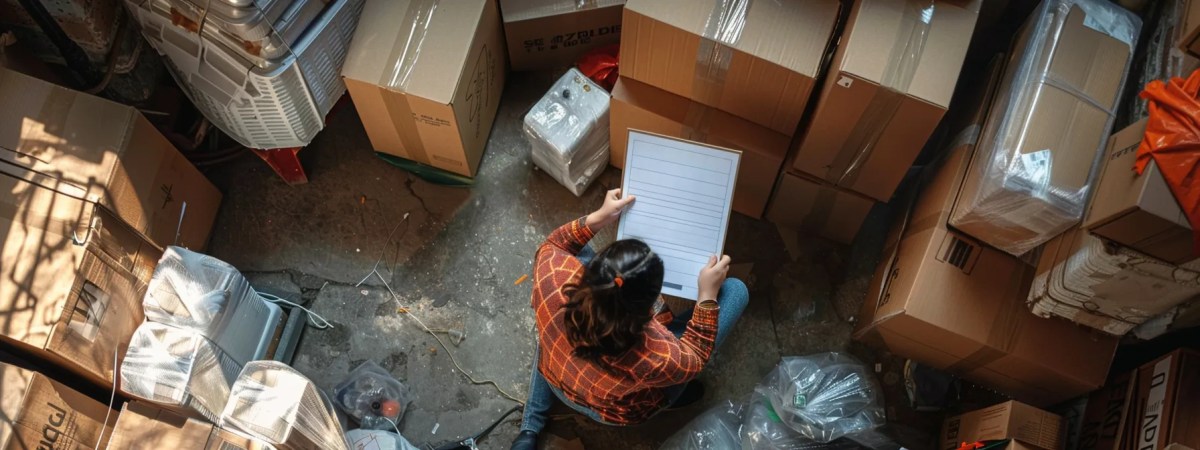
A bathroom cabinet inventory separates everyday essentials from products that need a leak, safety, or privacy decision before a Nashville move. Review medicine cabinets, vanity drawers, shower storage, and under-sink shelves. Keep needed medication and personal essentials in an owner-carried kit, then inventory the remaining items by category.
Sort grooming tools, sealed toiletries, fragile containers, and small accessories separately. Mark products that need carrier approval or disposal rather than packing them first and asking later. The aim is a clear list of what belongs in the household load, what stays with you, and what will not move.
Ask JM Moving for a written estimate based on the actual inventory, packing work, route, and access conditions. Confirm the included services and any exclusions before agreeing to a move.
Understanding the Scope of Bathroom Cabinet Contents
Bathroom cabinets and vanities harbor a uniquely diverse collection of items. Unlike a bedroom closet filled with folded shirts or a kitchen pantry containing canned goods, the bathroom contains an array of liquids, powders, glass containers, metal grooming tools, and loose everyday essentials. When creating a Nashville moving inventory specifically for your bathroom, you must categorize items carefully to determine what travels with you, what needs specialized wrapping, and what should be discarded before the moving truck arrives.

Ask JM Moving for its actual policy on liquids, aerosols, perfumes, cleaning products, batteries, and personal-care items. Requirements depend on the product and shipment; there is no universal rule here that all opened shampoo is accepted or that all cosmetics are prohibited. Identify the product accurately and keep any excluded item out of the ordinary cartons.
Let us break down the primary categories of items typically found in a bathroom cabinet inventory:
- Liquids and Semi-Liquids: Shampoos, conditioners, body washes, liquid soaps, lotions, mouthwash, and liquid foundations. These require airtight sealing and upright positioning during transit.
- Grooming Accessories: Hair dryers, curling irons, straighteners, electric razors, mirrors, and hairbrushes. These items need proper cord management and protective cushioning.
- Loose Contents and Small Sundries: Cotton balls, Q-tips, hair ties, bobby pins, nail clippers, tweezers, and travel-size toiletries. These should be gathered into small zipped pouches or segmented storage bins before boxing.
- Cosmetics and Skincare Powders: Pressed powders, eyeshadow palettes, blushes, and perfumes. Powders and pressed palettes are notoriously fragile and require individual bubble wrapping.
Ten Detailed Practical Tips for Bathroom Cabinet Packing
Achieving a successful bathroom pack requires adherence to proven packing methodologies. Here are ten practical, topic-specific tips designed to streamline your Nashville packing checklist and protect your personal care items during your relocation with JM Moving:
Before boxing a single item, empty every shelf of your medicine cabinet and under-sink vanity. Check product condition and dates. Keep medications separate for the owner’s review, and use appropriate disposal guidance rather than putting them into an ordinary discard pile. Do not change a medication routine as part of a packing task.
For accepted nonhazardous toiletries, keep the original labeled container and check that its intended closure works correctly. Place it upright in suitable secondary containment. Do not alter a closure in a way that affects its seal, and do not assume added plastic wrap makes a leaking or restricted product acceptable.
Never pack bottles of liquid on their sides. Use small, reinforced double-wall boxes (such as small book boxes) to keep containers upright. Fill any remaining void space with packing paper or clean towels to prevent shifting during transit.
Pressed makeup palettes easily shatter under minor impacts. Keep the compact closed and protect the outside in a suitable padded pouch or small carton. Avoid adding material that presses onto the powder or prevents the lid closing normally.
Small loose items like hair clips, nail files, tweezers, and dental floss picks will scatter if dropped into a large cardboard box. Group these grooming accessories into dedicated toiletry bags or clear plastic storage bins before placing them into packing cartons.
Ensure curling irons, flat irons, and blow dryers are completely cooled down before packing. Coil power cords neatly and secure them with velcro ties or twist ties—never wrap the cord tightly around the hot barrel, as this damages internal wiring. Place each tool in its own protective sleeve or wrap in bubble cushioning.
Avoid generic labels like “Bathroom.” Instead, use specific tags such as “Master Bathroom: Skincare Liquids & Lotions (Fragile)” or “Guest Bath: Hair Styling Tools & Accessories.” Detailed labeling helps the JM Moving crew place boxes in the correct room and allows you to find essentials immediately upon arrival.
Set aside a dedicated overnight bag or small box containing your immediate personal hygiene necessities: toothbrushes, toothpaste, face wash, deodorant, toilet paper, and daily medications. Keep this kit in your personal vehicle rather than loading it onto the moving truck so you have access on the first night in your new home.
First confirm whether the perfume or cologne is accepted in the shipment; alcohol-based products may have restrictions. For a bottle that is accepted, follow the agreed preparation instructions. Wrap each bottle individually in multiple layers of bubble wrap, secure with tape, and pack them vertically in a sturdy box surrounded by crumpled packing paper. Never allow glass bottles to touch one another directly.
If your bathroom includes specialized fixtures, wall-mounted magnifying mirrors, or detachable vanity accessories that require professional handling, request manufacturer review or professional assistance rather than attempting risky DIY disassembly.

Concrete Sample Inventory and Access Record
Maintaining a written or digital inventory record is essential for accountability during any local move in Nashville. Below is a concrete sample inventory and access record illustrating how to log bathroom cabinet contents efficiently before your move with JM Moving.
Substantive Frequently Asked Questions
When preparing a bathroom cabinet inventory for a relocation in Nashville, homeowners frequently raise specific logistical and operational questions. Below are ten substantive FAQs providing clear, practical answers.
1. Should I leave items inside my bathroom medicine cabinet during the move?
Empty loose contents from any cabinet that is actually moving. A wall-mounted or built-in cabinet may remain with the property, so confirm what is included before removing anything. Do not tape finished surfaces or attempt electrical, plumbing, or wall removal without the appropriate plan.
2. How do local movers handle opened bottles of shampoo and liquid soap?
Ask JM Moving about the exact product and container. If it is accepted, keep the label, check the closure, use appropriate secondary containment, and keep it separate from paper or fabric. Do not rely on extra plastic wrap as a guarantee against leaks.
3. What is the standard pricing structure for JM Moving services?
Ask JM Moving for a written estimate based on the actual inventory, packing work, route, and access conditions. Confirm the included services and any exclusions before agreeing to a move.
4. Can I request moving services outside of normal business hours?
Ask JM Moving about your preferred date and communication options. Confirm the agreed packing scope and crew availability directly; an inquiry alone does not create a booking.
5. How should I pack expensive glass perfume bottles?
First ask whether the perfume is accepted, because product composition and carrier policy matter. If accepted, follow the agreed preparation instructions, cushion each bottle separately, and prevent contact between glass surfaces. Do not pack restricted liquids simply because the bottles are wrapped.
6. What should be included in my first-night personal essentials kit?
Your first-night kit should contain daily toiletries that you will need immediately upon arrival at your new Nashville residence: toothbrushes, toothpaste, hand soap, toilet paper, face wash, deodorant, and essential medications. Keep this kit in your personal vehicle rather than on the moving truck.
7. How do I manage hair styling tools with hot components or electrical cords?
Ensure that hair dryers, curling irons, and straighteners are completely cool to the touch before packing. Coil the electrical cords neatly using twist ties or velcro straps—avoid wrapping cords tightly around the barrels—and place each tool into an individual protective sleeve or padded pouch.
8. What is the best way to organize loose grooming accessories like hair ties and tweezers?
Loose items easily get lost at the bottom of large moving cartons. Gather small grooming accessories—such as tweezers, nail clippers, bobby pins, and razors—into small zipped cosmetic pouches or segmented plastic storage organizers before packing them into larger boxes.
9. How do I coordinate my bathroom inventory with the overall home moving process?
Integrating your bathroom cabinet inventory with your broader home move is simple when using structured planning tools. You can reference our online resources, such as the room inventory checklist and packing scope checklist, to check that every room is fully accounted for.
10. Who should I contact to schedule my Nashville move with JM Moving?
To discuss your specific moving inventory, review packing scopes, or confirm crew availability, you can reach out directly to JM Moving at (615) 710-9990 or visit our website at https://jmmoving.store.
Bathroom packing checklist: separate privacy and safety decisions
A bathroom packing checklist works best with four groups: owner-carried essentials, accepted household items, products needing a decision, and items going to an appropriate disposal route. Use a written check against each group before sealing anything. This prevents a partly used cleaner from ending up beside towels because it happened to fit the same container.
For packing toiletries, keep original labels readable. Do not pour unlike products together or transfer chemicals into beverage containers. Set aside anything leaking, unidentified, damaged, or recalled. The mover needs the product identity and handling question, not private details about why a person uses it.
Your grooming accessory inventory can group simple items while listing valuable or fragile equipment separately. Put sharp grooming tools in a suitable protective case rather than loose in a pouch. Match chargers with their devices and keep cords loosely organized. Follow manufacturer guidance for battery-powered equipment and do not use a damaged or swollen battery.
A first-night bathroom kit should be modest enough to keep under your control. Include toiletries, toilet paper, a towel, and items each person needs promptly. Keep medicines as directed by their labels and clinician or pharmacist; a hot parked car may be inappropriate. Arrange any temperature-sensitive or medically necessary supplies with the appropriate professional before moving day.
For unused medicines, consult FDA disposal guidance or a pharmacist. Take-back options are generally preferred for most medicines, and disposal instructions differ by product. Do not treat every item in a medicine cabinet as ordinary trash or assume it can be flushed.
For cleaning chemicals or other household hazardous products, check Metro Nashville’s household hazardous waste guidance and confirm the exact item’s acceptance. The ordinary household packing process should remain separate from waste transport or disposal.
Use neutral container labels
Mark the destination and code, such as BATH-02, guest bathroom. Keep medication names, medical details, and other private contents off the exterior. The detailed bathroom cabinet inventory can stay with the owner. If more than one bathroom is involved, add the household member’s chosen room label without disclosing personal information.
Final cabinet sweep
- Check drawers, high shelves, shower organizers, and storage behind doors.
- Confirm excluded products are outside the ready-to-load area.
- Keep the owner-carried kit clearly marked and under your control.
- Record the final carton count and any fragile containers.
- At delivery, inspect for leaks before opening cartons on a protected surface.
If a spill is found, keep people and pets away until the product is identified and follow its safety instructions. Do not mix cleaners while trying to clean a leak. Record the issue and contact the appropriate service or professional when needed, rather than continuing to unpack contaminated items into the new cabinets.

Plan your Nashville move with JM Moving
Share your inventory, requested date, packing needs, and access details with JM Moving. Call (615) 710-9990 to ask about the next step. Request written confirmation of scope, pricing, and availability before making plans around a service.
