
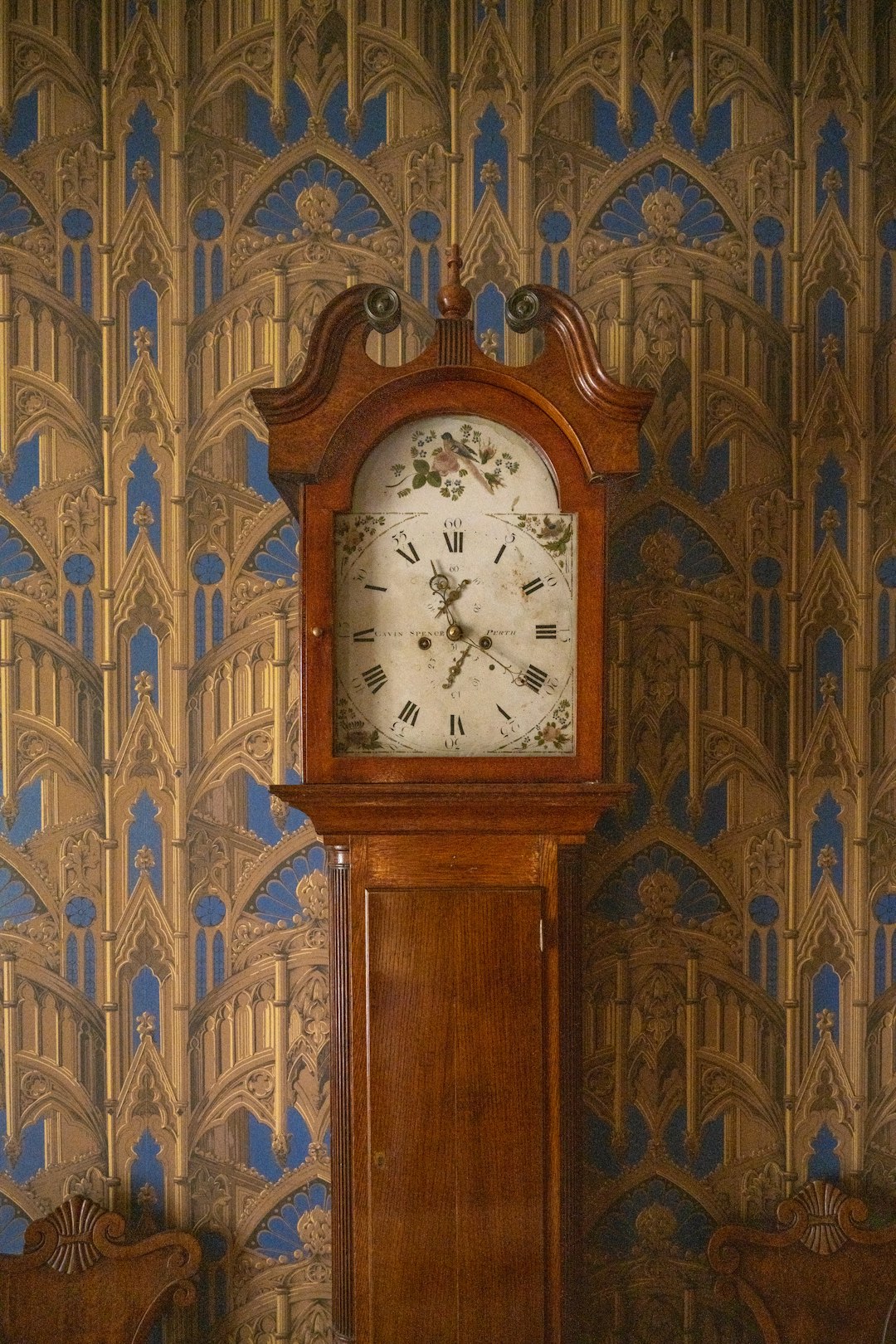
A grandfather clock survey should keep the cabinet, known accessories, technical preparation, and property route connected without treating them as one vague furniture entry. For a local Nashville move, record the actual clock identifier and preparation responsibilities before asking JM Moving to review the scope. Keep component information factual and use manufacturer guidance or an appropriate qualified technician for technical questions. This accessory record does not teach movement removal, clock disassembly, lifting, or mechanical adjustment.
Identify the actual clock and its current location
Record the manufacturer or model where known and give the clock a recognizable room identifier. Include available outside dimensions, explaining what is confirmed and what remains unknown. If the clock has an uncertain history or maker, state that rather than turning a household assumption into a verified description. An overall accessible photograph can help identify the request.

Describe the current configuration factually. Keep the cabinet entry connected to its accessory list and preparation status so a photo of the standing clock is not mistaken for confirmation that it is ready for transportation. Ask the move contact what additional information it needs before the proposed scope is confirmed. The identifier provides continuity for review without establishing technical condition, value, or a handling method.
Create an accessory list from confirmed information
List known keys, instructions, separate decorative pieces, or other accessories that the responsible household contact can identify. Technical components should be described according to reliable information from the actual clock or qualified preparation contact. Do not decide how a component should be removed or handled merely because it appears on an inventory checklist.
State whether each listed accessory is currently with the clock, stored elsewhere, or awaiting confirmation. If a separate container is prepared under an agreed arrangement, connect its identifier to the clock. Keep private ownership information outside visible labels. The record should help the household and provider identify the group without suggesting that every clock has the same components or preparation requirements.
Keep technical preparation with the responsible qualified contact
Ask which tasks must be completed before transportation and who is responsible for them. Use the information appropriate to the actual clock and involve an appropriate qualified technician when technical preparation is needed. Record the confirmed responsibility and completion status alongside the clock identifier.
This guide does not direct the household to remove a movement, detach unfamiliar components, or change mechanical settings. If preparation remains incomplete or uncertain, report that fact before assuming the moving arrangement is settled. A clear responsibility record separates transportation from technician-dependent work and helps avoid discovering an unresolved task only when the team arrives.
Record the cabinet’s visible condition factually
Take accessible overall and detail photographs for visible concerns. Use location-based notes such as mark near the lower door or visible finish difference on the left side, without guessing cause. Connect each detail view to the main clock identifier so a later question remains specific.
Keep operating-condition, conservation, valuation, or restoration questions with the appropriate qualified contact. A moving inventory photograph can support communication, but it is not a mechanical inspection or an expert assessment of the clock. Ask about the provider’s agreed documentation and concern process and retain useful observations with the written move record.
Explain the room route separately from accessories
Show the accessible opening from the clock’s room and relevant adjoining turns, stairs, or landings. Identify the locations consistently and provide available measurements with honest limits. An accessory list describes what belongs with the clock; it does not answer how the cabinet reaches the proposed loading point.
Do not reposition, tilt, or dismantle the clock to improve a camera angle. If a view cannot be obtained from an appropriate accessible position, state the missing information and ask about another assessment arrangement. Keep exterior approach and property permissions separate from the item’s specifications. The provider must review the actual clock and route before a handling arrangement is confirmed.
Prepare an independent destination record
Identify the room where the clock is intended to be placed and supply its access facts separately. A cabinet leaving one floor may be intended for a different approach or room layout at the new Nashville property. Tell the move contact about that change and mark unavailable measurements or possession information as unresolved.
Ask which placement, assembly, or technician-dependent setup tasks are included. Transportation and returning a clock to operation are different questions. Do not infer a mechanical adjustment or restoration service from a moving scope. Keep the qualified setup contact, where needed, connected to the same clock and accessory record so responsibility remains clear after delivery.
Use a practical Nashville clock record example
A household initially requests moving its grandfather clock with accessories. A clearer record gives the cabinet a room identifier, supplies known dimensions, and lists the keys and separate instructions. It marks technical component details pending confirmation by the appropriate qualified contact. Accessible photographs show the room position and the adjoining approach.
The destination record identifies another room and a separate route, while the preparation list names who confirms the technical status. The household asks JM Moving to review the requested transportation and placement scope. This record is useful because it connects the cabinet, confirmed accessories, unresolved technical information, and both property routes without inventing a disassembly method or operating guarantee.
Check the final accessory record against the agreed scope
Before pickup, compare the current clock identifier, accessory list, preparation status, and route information with the written scope. If an accessory is discovered elsewhere, a task changes, or destination placement is revised, state that update explicitly. Keep older information marked superseded rather than allowing several versions to circulate.
At delivery, use the clock and container identifiers for specific placement or component questions. Keep technical setup responsibilities with the appropriate qualified contact and follow the provider’s actual concern process for any observed issue. A clear accessory record supports communication and checking; it does not replace the agreement or determine a mechanical, valuation, or claims outcome.
Example clock accessory record
Use these categories to keep confirmed accessories and technical dependencies distinct. Replace the examples with the actual clock’s information; the record does not establish a disassembly or setup procedure.
| Record | Information | Question to resolve |
|---|---|---|
| Clock identity | Room identifier, known model and available outside dimensions | What identification remains uncertain? |
| Confirmed accessories | Known keys, instructions or separately stored pieces | Which groups are included in the request? |
| Technical preparation | Responsible qualified contact and actual task status | What remains pending before transportation? |
| Visible condition | Factual observation connected to an accessible photograph | Is specialist review needed? |
| Destination setup | Intended room, independent approach and setup responsibility | Which tasks are included in the moving scope? |
Ten clock inventory record tips
- Name the clock. Use one room-based identifier across the cabinet inventory, accessory list, photographs, and destination record.
- Record known model facts. State actual manufacturer, model, and dimensions where available and mark uncertain identification honestly.
- List confirmed accessories. Identify keys, instructions, or known separate pieces without assuming universal component requirements.
- Connect separate containers. Keep an agreed accessory-container identifier associated with the clock instead of a general hardware group.
- Assign technical responsibility. Ask who completes model-specific preparation and record the task status with the appropriate qualified contact.
- Avoid unfamiliar disassembly. Do not detach technical components from a generic inventory guide. Obtain appropriate instructions and qualified assistance.
- Document visible condition. Use factual location-based observations and accessible images without diagnosing mechanics or assigning value.
- Explain pickup access. Show ordinary accessible room and route views and mark missing measurements or uninspected areas.
- Check destination separately. Name the intended room and independently review its approach and setup responsibilities.
- Keep updates current. Report discovered accessories, preparation changes, and revised placement before treating the scope as settled.
Create a clock-specific accessory handoff sheet
A grandfather clock accessory record should remain understandable even when the technician, household contact and receiver are different people. Use one clock identifier and assign a separate number to each prepared accessory container. Record what the qualified preparation contact says belongs in the group, who prepared it and where it will be received. Do not turn an assumed component list from another clock into the actual contents record.
Keep ordinary household accessories, such as a known key or instruction booklet, distinct from components that require technical preparation. If the key is retained personally, identify its custodian privately rather than leaving it unaccounted for. If a part is discovered after preparation, ask the responsible contact how the record should be updated before putting it into an unrelated box.
Four status questions before pickup
- Is the clock identity confirmed or are model details still unknown?
- Has the appropriate preparation contact confirmed completion of the necessary work?
- Are the prepared accessory containers identified and counted?
- Has the destination setup responsibility been agreed separately from transport?

Use the right manual and keep mechanical questions separate
Howard Miller’s official support resources include manuals and warranty information for its products. Consult the appropriate maker and model documents or a qualified clock technician for the actual clock. A manufacturer resource is a reference point for the technical contact, not a universal disassembly procedure or a promise that JM Moving performs mechanical service.
If operating condition is uncertain, describe that uncertainty rather than attempting adjustments during the moving survey. Accessible photographs can document a visible cabinet mark, but they cannot determine why a mechanism behaves a certain way. Keep restoration, appraisal and mechanical diagnosis outside the ordinary room inventory and route record.
After placement at the destination, reconcile the clock identifier and prepared containers with the receiving contact. Let the appropriate technician handle any agreed technical setup. If a container or visible condition raises a concern, report the specific facts promptly using the provider’s actual process. Do not describe room delivery as an operating test, and do not discard the preparation record before the household has completed its own reconciliation.
Frequently asked questions
Should accessories share the clock identifier?
Connect the accessory list and separate containers to the main clock record so the group remains recognizable.
Does every grandfather clock need the same preparation?
Use information relevant to the actual clock and an appropriate qualified contact rather than assuming universal components or procedures.
Can this guide explain movement removal?
No. Technical preparation and mechanical work need appropriate instructions and qualified responsibility.
How should missing model information be recorded?
Mark it unknown and provide accessible identifying photographs, then ask what additional assessment is needed.
Can a condition photo diagnose the mechanism?
No. Keep technical condition questions with an appropriate qualified contact and use photos for factual visible observations.
What if an accessory is stored in another room?
Record its location and connect it to the clock identifier before final preparation.
Does transportation include mechanical setup?
Do not assume it does. Ask about placement and technician-dependent setup separately.
Should destination access be assessed too?
Provide independent route facts and highlight anything unavailable or unconfirmed at the new property.
What if preparation is still pending?
Report the actual status and ask which arrangement is available before treating the move as confirmed.
Where can I request a review?
Contact JM Moving with the clock identifier, confirmed accessories, preparation responsibilities, accessible photos, and Nashville addresses.
Request a Nashville clock inventory review
Connect the clock to your room inventory, confirm the preparation scope, and organize accessible survey photographs. Contact JM Moving with your local Nashville request: (615) 710-9990.
