
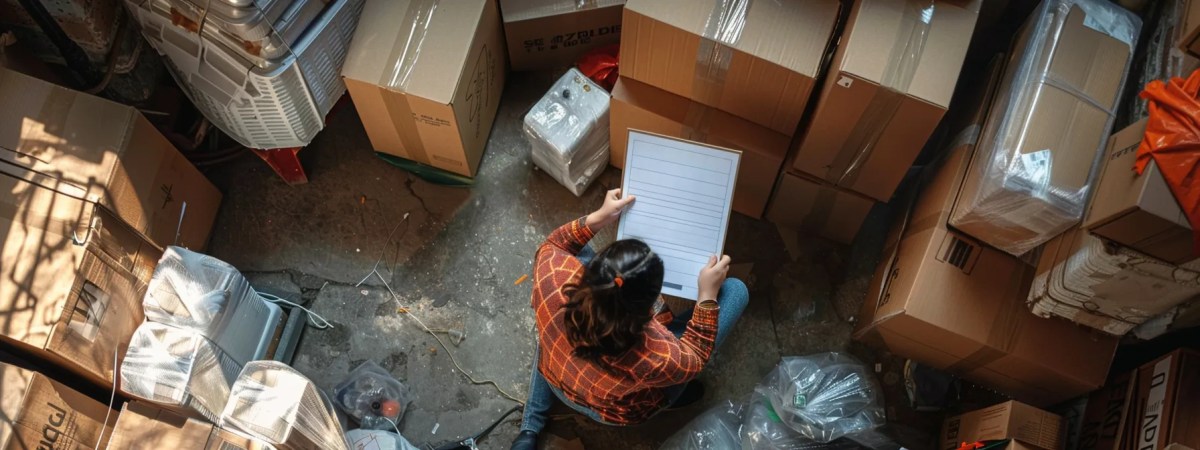
Laundry appliance readiness for a Nashville move is about confirming decisions before anyone tries to move a washer or dryer. Record the model, visible condition, connections, access route, preparation contact, and destination. A machine that is empty is not necessarily disconnected, prepared for transport, or suitable for the new laundry space.
This guide is a planning record for homeowners, tenants, property contacts, and moving coordinators. It does not provide do-it-yourself gas, electrical, plumbing, lifting, or installation instructions. The correct procedure depends on the appliance and property. Use the manufacturer’s current instructions and appropriately qualified service professionals for technical work.
1. Identify the actual washer and dryer
Start with the make and full model of each appliance. Photograph an identification label only when it is safely accessible; do not pull a connected machine out just to find it. Note whether the appliances are side by side, stacked with a kit, part of a combined unit, on pedestals, or enclosed by cabinetry. Those differences affect the questions your service provider and mover need to review.

Create separate entries for the washer, dryer, pedestal, stacking components, and other detachable accessories. Record whether each item belongs to you, a landlord, or another owner. Resolve ownership and permission before disconnection is arranged. An appliance being physically inside your current home does not establish that it is included in the move.
2. Build a washer and dryer moving inventory
A useful washer and dryer moving inventory describes the actual equipment rather than only saying “laundry pair.” Include the visible model information, overall dimensions when safely measurable, installation arrangement, destination room, and any known condition issue. Keep serial numbers in the private record if you prefer; exterior labels can use a neutral code such as LAUN-01.
Distinguish observation from assumption. Write “connection type awaiting technician review” if you cannot identify it reliably. Do not infer a dryer’s connection requirements from its appearance or from the appliance at the new property. Keep unresolved compatibility questions visible until the appropriate person answers them.
3. Assign appliance disconnect responsibilities
Before moving day, identify who is responsible for disconnecting water, drainage, electricity, gas, ventilation, or other connections that apply to the model. Ask that provider what access and preparation they require. Schedule the work with enough room for an unexpected issue, and record when the appliance can be released for physical handling.
For a gas dryer, Whirlpool’s appliance-moving guidance directs customers to a professional appliance technician for gas-line disconnection and reconnection. Do not turn a general moving checklist into instructions for that work. Confirm the appropriate qualified provider for your equipment and location.
JM Moving’s accepted physical moving scope should be confirmed separately. Do not assume that lifting and transport include utility disconnection, leak testing, repair, installation, or removal from a built-in arrangement. If one company is providing several services, ask for the responsibilities and exclusions in writing rather than relying on the word “full-service.”
4. Locate model-specific transport instructions
The appliance preparation record should identify the current manufacturer guide and the person applying it. Some machines use model-specific transport supports or other preparation components. The correct parts and procedure should come from the manufacturer or a qualified service provider, not a substitute selected because it looks similar.
Whirlpool’s front-load washer moving guidance discusses shipping bolts and preparation for its equipment. That does not mean every washer uses the same supports or that a general moving crew should install them. Ask the responsible technician what your exact model needs and how readiness will be documented.
Keep any supplied transport parts together with their identification and instructions. If parts are missing, record that as an unresolved preparation issue. Do not treat a machine as ready because a move date is approaching. Let the qualified provider decide the next safe step, including whether replacement parts or a revised schedule are necessary.

5. Separate ordinary laundry supplies from the appliances
Remove clothing and ordinary loose belongings before the preparation appointment when it is safe to do so. Check nearby shelves, pedestals, and cabinets for detergent, cleaning products, sharp tools, coins, and personal items. These are separate inventory groups and should not become hidden contents in an appliance or accessory carton.
Keep chemical products labeled and ask JM Moving about its actual accepted-item and exclusion policies. Do not combine liquids, decant products into unmarked bottles, or assume that every laundry product is suitable for the load. A product requiring a separate decision should be recorded as pending or excluded rather than buried in the count for the laundry room.
6. Make the route review specific
A Nashville laundry room access review should include the room entrance, nearby turns, stairs, thresholds, hallway restrictions, and the route to the loading area. Share accurate photographs taken from safe positions. Record the space available around the appliance, including whether a service professional needs access before it can be prepared.
Do not shift a heavy connected machine to make a photograph look clearer. If an area cannot be inspected safely, identify the gap and arrange the right review. Ask the mover to evaluate dimensions, package size, weight information, and the proposed handling method. A doorway measurement by itself does not establish that a move is feasible.
At a managed property, confirm elevator arrangements, loading rules, and any required documentation with the building contact. Separate the technician’s appointment from the moving crew’s access window. The building may have different requirements for service work and freight handling, so one reservation should not be assumed to cover both.
7. Confirm destination readiness before delivery
A machine can arrive successfully and still be unsuitable for immediate installation. Have an appropriately qualified person review the destination’s connections, ventilation, clearances, installation surface, and compatibility with the actual models. A previous washer and dryer in that room do not prove that your appliances will fit or connect correctly.
Record who will receive the appliances and where they can safely wait if installation is not ready. Confirm whether placement is part of the moving scope and what the installer needs access to afterward. Keep a clear staging area without blocking exits or encouraging someone to use the appliance as a temporary table or storage shelf.
Example appliance preparation record
| Item code | Observation | Responsible contact | Status |
|---|---|---|---|
| LAUN-01 | Washer model recorded | Owner and service provider | Transport preparation pending |
| LAUN-02 | Dryer connection review needed | Qualified technician | Not released for moving |
| ACC-01 | Approved accessory container | Owner | Counted and labeled |
This is a planning example, not a certification of readiness. Replace every observation and status with the actual finding. Record who made a decision and when; an unchecked item should remain visible rather than being silently treated as complete.
8. Use a clear handoff before loading
At the appliance moving handoff, confirm the item codes, destination, accepted physical scope, and preparation status. Keep technical completion information available to the responsible people without sharing unrelated private documents. If the crew finds that an appliance is still connected, unstable, leaking, or otherwise not prepared as expected, pause that item for qualified review.
A handoff record should not pressure anyone into work outside their qualifications or agreement. Record the exception, contact the person responsible for preparation, and discuss the available next step. Do not promise that a crew can wait indefinitely or that a later return visit is included; those are scope and scheduling questions to confirm.
9. Keep receipt, installation, and operation separate
After delivery, compare the appliance codes and visible condition with the starting record. Note missing accessories or visible concerns before discarding relevant packaging. Receipt confirms that an item reached the destination; it does not establish that the machine is installed correctly or ready to run.
The qualified installer should follow the actual manufacturer requirements for setup and any required checks. Do not start a cycle merely to see whether transport went well. Keep the installation confirmation and unresolved issues separate from the moving receipt, and follow the equipment and service-provider instructions before use.
Use the room inventory checklist to include nearby cabinets and accessories. Use the photo walkthrough checklist for access details and the packing scope checklist to record which responsibilities remain with the owner or a specialist.
Final laundry appliance readiness review
- Confirm ownership and permission to move each appliance.
- Record the actual model and installation arrangement.
- Assign technical disconnection to the appropriate qualified provider.
- Obtain model-specific transport preparation instructions.
- Keep missing parts and incomplete preparation marked as unresolved.
- Separate clothing, loose accessories, and chemical supplies from the machines.
- Review the pickup route and building access with the crew.
- Have the destination installation requirements checked by the responsible specialist.
- Confirm the physical moving scope and item handoff.
- Keep delivery receipt separate from installation and approval for operation.
Ten frequently asked questions
Does moving a washer include disconnecting it?
Not automatically. Confirm disconnection, technical preparation, lifting, transport, placement, and installation as separate tasks. Ask each provider to state what it accepts and what must be completed before its appointment.
Who should disconnect a gas dryer?
Use an appropriately qualified professional for gas work. Whirlpool’s manufacturer guidance specifically calls for a professional appliance technician for gas-line disconnection and reconnection. This article does not provide a do-it-yourself procedure.
Should every washer use the same transport bolts?
No universal part or preparation method should be assumed. Check the exact model’s manufacturer instructions and ask the qualified service provider to determine the correct supports and procedure. Record missing parts as unresolved.
Can I leave detergent in a pedestal drawer?
Treat laundry supplies as a separate inventory group. Identify products, keep labels intact, and ask about the mover’s actual exclusions. Do not hide liquids or uncertain materials in a drawer or appliance.
What if the model label is difficult to reach?
Do not move a connected appliance or enter an unsafe position to photograph it. Use existing paperwork if available, and ask the qualified preparation contact to verify the model when access is appropriate.
Can the crew take apart a stacked laundry pair?
Only if that specific work has been accepted and can be performed appropriately for the models and stacking arrangement. Do not assume unstacking is included in ordinary transport. Confirm the responsible specialist beforehand.
What should I photograph before moving day?
Capture accessible views of the equipment, visible condition, room entrance, route, and destination space. Avoid unsafe repositioning. Keep private records out of general quote images and identify any area that remains unreviewed.
Does an existing laundry hookup prove compatibility?
No. Have the appropriate qualified person review the actual models and destination requirements. Space, connections, ventilation, and other installation conditions should be confirmed before relying on immediate setup.
What if the technician cannot finish before the crew arrives?
Tell the move coordinator promptly, mark the appliance as not ready, and discuss the scope and schedule options. Do not substitute an improvised disconnection or preparation method to avoid a delay.
Can I run the appliances as soon as they are delivered?
Wait until the responsible qualified person has completed the required installation and checks under the manufacturer’s instructions. Physical receipt and readiness for operation are different milestones in the handoff record.

Discuss your Nashville moving plan with JM Moving
Share the actual inventory, requested date, packing needs, and access conditions with JM Moving. Call (615) 710-9990 to ask about the next step. Confirm the accepted scope, price, availability, and responsibilities in writing before relying on a service arrangement.
