
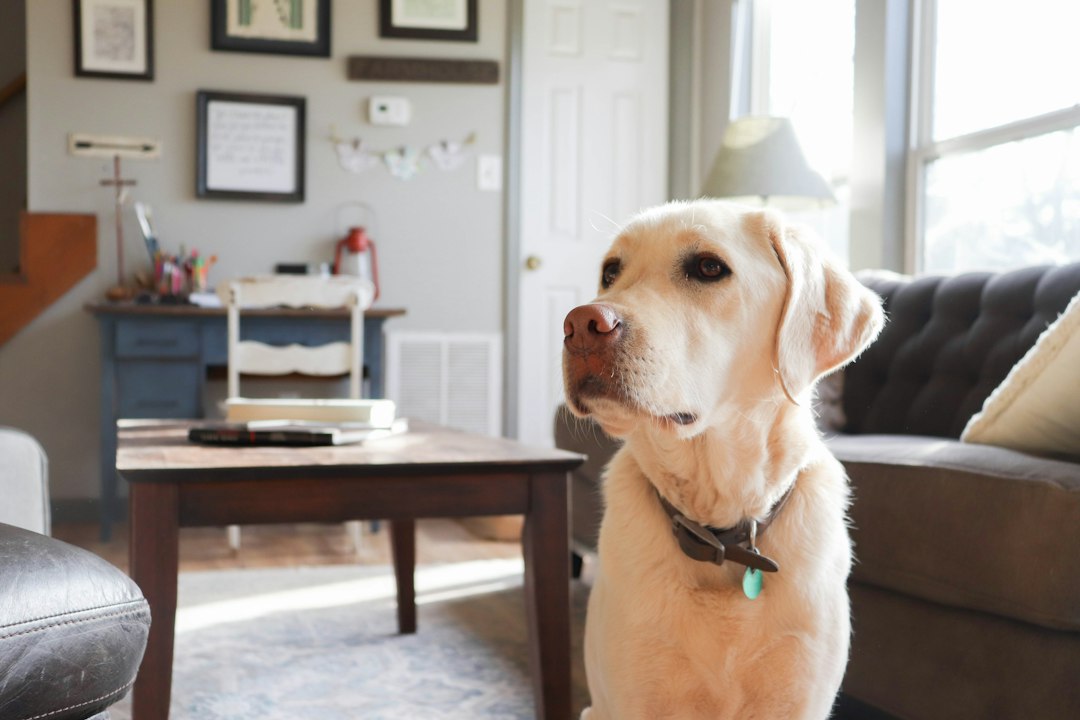
A pet care handoff log answers a simple moving-day question: who is responsible for the animal right now? During a Nashville move, that answer can become unclear when one person checks the inventory, another drives to the new home, and somebody else opens a room for the final furniture pickup. A named caregiver, a confirmed location, and an explicit transfer of responsibility are more useful than everybody assuming somebody else is watching.
This guide focuses on that handoff. It is a planning companion to JM Moving’s broader moving with pets guide, rather than a veterinary care or animal transport manual. The household remains responsible for the pet’s care arrangements. Ask your veterinarian about the animal’s individual needs, and confirm the physical moving scope with JM Moving separately.

Name the current caregiver and the next caregiver
Choose an adult who agrees to manage the pet during each stage of the move. Record the starting arrangement, the expected transition, and a backup if the first person becomes unavailable. A name on a planning sheet is only a proposal until that person has accepted the responsibility. Do not automatically assign pet care to a mover, visitor, child, or neighbor because they happen to be nearby.
Keep the role separate from tasks that repeatedly draw the caregiver away. Somebody answering calls about the loading dock may be unable to monitor a pet in another room. If one person must perform both jobs, plan how responsibility transfers before they leave. The receiving caregiver should acknowledge the handoff directly, rather than discovering it through an unanswered text.
Choose a location that matches the actual animal
A quiet room can be useful for some dogs, but it is not a universal solution for every pet. Cornell’s guidance on moving with a dog discusses a trusted sitter or a quiet separate room during the move, and checking the new home before giving the dog wider access. It also notes that confinement can be unsuitable for some dogs. Discuss individual concerns with your veterinarian rather than experimenting with unfamiliar confinement on loading day.
Evaluate the proposed location before the crew arrives. Is it outside the carrying route? Does the household still need furniture from it? Can the responsible caregiver monitor the pet appropriately? Are there unsecured exits, loose packing materials, or items the animal could reach? A room labelled “pet room” is not automatically ready or suitable. If it cannot work, arrange an appropriate alternative before loading begins.
Separate the room label from permission to open it
Use a clear temporary notice that tells people to contact the designated adult before opening the door. Keep private medical or behavior details off a public sign. The important handling message is that the room is excluded from routine access until the household caregiver confirms otherwise. Explain the arrangement to the moving contact during the walkthrough, rather than relying on the sign alone.
Make room names consistent with the moving inventory. “Back bedroom” can mean different spaces to different people. A simple room code or an annotated floor sketch helps the household explain which door is involved. Do not lock someone inside or block an emergency exit to create a pet boundary. The household needs a practical plan that preserves appropriate access and animal care.
Use a short handoff record
The example below shows a planning format, not a prescribed pet-care routine. Keep the working version private and tailor it to the arrangements your caregivers have actually accepted. Record a completed transfer only after the next person acknowledges it and confirms the pet’s location.
| Stage | Responsible adult | Confirmed location | Next action |
|---|---|---|---|
| Before loading | Caregiver A | Approved household arrangement | Brief the moving contact about excluded access |
| Caregiver change | A transfers directly to B | Location confirmed together | B acknowledges responsibility |
| Departure | Agreed traveling caregiver | Appropriate travel arrangement | Confirm destination contact is ready |
| Arrival | Receiving caregiver | Checked destination area | Keep separate from active unloading |
Add an exception field when something changes. Examples include a delayed caregiver, a room unexpectedly needed for access, or a destination that is not ready. The record should show the new agreed arrangement, not merely cross out the old one. If no suitable person or location is available, pause the dependent household task and resolve the care arrangement before proceeding.

Plan the moment the pet room becomes part of the move
The difficult point is often the last room. A household may choose a bedroom for the pet early in the day, then realize its bed and dresser still need to leave. Identify that dependency in advance. Decide where the pet will go before the furniture pickup and who will confirm that the room is released. Do not ask the crew to interpret a closed door as permission to enter.
Use a simple sequence: the caregiver confirms the next suitable arrangement, transfers the pet under that plan, checks the former location, and tells the moving contact that the room is available. The caregiver then remains responsible at the new location. “Room released” and “pet care finished” are different facts. A completed furniture pickup does not end the household’s supervision responsibilities.
Keep the owner-carried supplies outside the crew load
Identify the supplies the caregiver needs access to during the move and keep them in the agreed owner-carried group. Use the pet’s existing care instructions rather than changing feeding, medication, or travel routines based on a general moving article. Ask the veterinarian about any medical or behavioral questions. Keep contact information and necessary records available privately to the responsible adult.
Label the supply bag clearly enough that it is not mistaken for an ordinary moving carton. Record who takes it, where it will be kept, and who receives it. Do not leave medicines, leads, carriers, or other required items buried in a room that is about to be loaded. A supply bag should support the accepted care arrangement, not substitute for a caregiver.
Repeat the check at the destination
Arrival creates another handoff, often while exterior doors are open and unfamiliar objects are being carried inside. The receiving caregiver should confirm the intended area before the pet enters it. Check that the current arrangement still matches the household plan, especially if an access route or room assignment has changed. Keep the moving team informed about the relevant boundary without sharing unnecessary private details.
Do not assume that the old home’s plan transfers unchanged to the new property. A door may open to an unfenced area, a room may contain unpacked tools, or the proposed space may be needed for unloading. Review the actual conditions. If the chosen area is unavailable, use the agreed backup rather than improvising around an active furniture route.
Work through one two-address handoff
Consider a household whose first caregiver stays at the origin while another adult prepares the destination. The moving coordinator needs a final furniture decision at the same moment the pet’s caregiver is due to leave. Without a handoff plan, both adults may assume the other is still responsible. Resolve that conflict by naming which task waits and who continues the accepted care arrangement.
The destination adult first confirms that the agreed receiving area is available. The traveling caregiver then confirms the pet and owner-carried supplies are in the appropriate travel arrangement before the origin room is released. At arrival, the receiving adult acknowledges the transfer directly. The log records those completed steps rather than predicting them from the truck’s schedule.
If the destination room is unavailable, keep the exception visible and use the previously agreed suitable backup. Do not let the absence of a furniture problem obscure a pet-care problem. The mover may be able to unload other rooms while the household resolves its own arrangement, but any changed sequence must be discussed rather than assumed.
After the transfer, check that the caregiver has the necessary supplies and knows how to reach the household decision-maker. Remove or update an obsolete room notice so it does not confuse the later walkthrough. Keep the current care arrangement clear until the household is ready to end the moving-day plan.
10 pet-care handoff checks
- Confirm the caregiver. Obtain an explicit agreement for each stage, including any backup.
- Separate roles. Avoid leaving responsibility unclear when the caregiver must handle another moving task.
- Check the location. Review its suitability for the actual animal and the day’s access needs.
- Explain the boundary. Tell the moving contact which room requires household permission before entry.
- Keep signs simple. Use a room identifier and contact instruction without private medical details.
- Plan the room release. Resolve the pet’s next arrangement before furniture is collected from that space.
- Transfer directly. Have the next caregiver acknowledge the responsibility and location.
- Retain supplies. Keep necessary owner-carried items accessible to the responsible adult.
- Recheck at arrival. Confirm the destination area instead of relying on the old-home plan.
- Record changes. Update the current arrangement and tell the people affected by it.

Frequently asked questions
Is a pet room always the right choice?
No. The arrangement must suit the animal and the property. Ask your veterinarian about individual concerns and consider an appropriate trusted caregiver elsewhere when needed.
Can the moving crew take responsibility for my pet?
Do not assume pet care is included. Arrange an accepted household caregiver and confirm the actual moving scope separately with JM Moving.
What should a door notice say?
Identify that access must be cleared with the designated adult. Keep it short, visible, and consistent with the walkthrough briefing.
When is a caregiver handoff complete?
When the receiving adult explicitly accepts responsibility and confirms the pet’s current location and relevant arrangements. An unanswered message is not a completed transfer.
What if furniture must leave the pet room?
Move the pet under its accepted care plan first, then have the caregiver tell the moving contact the room is released.
Should pet supplies go on the truck?
Keep items needed during the move with the responsible caregiver under the household’s owner-carried plan. Review other belongings in the normal inventory.
Does a familiar room eliminate stress or escape risk?
No arrangement provides that guarantee. Review the actual animal, exits, care needs, and changing access conditions rather than relying on a room label.
What if the designated adult has to leave?
Use the agreed backup and complete a direct transfer first. If nobody has accepted responsibility, resolve that gap before leaving the care task.
Should the new home use the same room plan?
Check the new property independently. Its doors, routes, available rooms, and unpacked materials may require a different arrangement.
What does JM Moving need to know?
Share the room-access boundary, household contact, and any effect on the agreed loading sequence. Veterinary or private care information usually belongs with the caregiver.
Connect the handoff with the moving plan
Use the room inventory checklist to identify any furniture still in the designated area. Record related packing responsibilities in the packing scope checklist. Contact JM Moving at (615) 710-9990 to discuss the physical move, confirm availability, and review the actual service arrangement.
